 Diseases of stored fruit are divided into fungal and physiological. Fruits affected by the first ones rot. The cause of rotting is most often the skin damaged during harvest or by pests. In turn, physiological diseases are the result of disturbances in the process of fruit ripening, so it is more difficult to prevent them.
Among the fungal diseases, the most common ones are:
– wet rot of apples, occurring in the first months of storage. Rotting apples become soft, water leaks from sick places. Their flesh has an unpleasant smell, which is also given to healthy fruit. Prevention of the disease consists in preventing damage to the cuticle;
– brown rot, attacking fruit before harvesting; its source is fruit, rotten in the previous year. The first fruits can be noticed already in summer, that rot on the tree, Rot also occurs in the first months of storage. Infected fruit is dry, and their rind is hard. In combating the disease, picking and destroying rotten and mummified fruits and removing dead branches play an important role;
– bitter rot of fruit, caused by fungi that cause gangrene of the bark. The disease incidence increases towards the end of the storage period. On apples of susceptible varieties (Orange Coke, Bankruptcy) the number of decay spots can be up to a dozen. The prevention of the disease consists in maintaining the proper health of trees.
From the group of physiological diseases, the following should be noted:
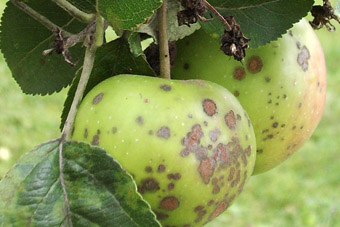
– bitter spot under the skin, occurs on large fruits, especially at higher temperatures and low relative air humidity. These are tiny spots on the skin, which from the initial olive color turns into brown over time. The flesh under the skin darkens, it dries up and becomes corky. Sometimes layers of corky cells are found in the deeper parts of the flesh, visible after cutting the fruit. This disease can be reduced by rapidly cooling the fruit after harvesting and storing it at low temperature, at high air humidity. The disease occurs to a lesser extent, when moderate fertilization of trees is applied;
– Jonathan's spot, it looks a bit like a bitter spot under the skin. There are also small spots on the skin, but black. Symptoms are more pronounced on the colored side of the fruit and do not extend into the flesh. The occurrence of the disease is not accompanied by a bitter taste, as in the case of bitter spot under the skin. Prevention consists in quickly cooling the fruit after harvesting and keeping it at a low temperature, preferably in polyethylene film bags;
– surface burn, characterized by the appearance of the peel of the fruit identical to scalding it with hot water. Symptoms occur after 2…3 months of storage, most often on light fruit. Irregular, the yellow-brown spots are slightly concave. The surface burn is enhanced by high nitrogen fertilization, too early harvest and late cooling of the fruit after harvesting. In the initial period of storage, the room should be ventilated intensively, in which the fruits are folded.