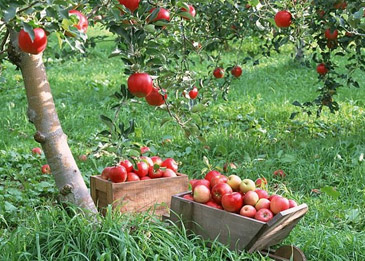
Apples are the most frequently and longest preserved fruit with good results. After harvesting, place the fruit as soon as possible in a cool room with a temperature of. ok. 0do temp (but not lower). This allows for the extension of their storage period, with simultaneous limitation of natural losses, rotting and the occurrence of physiological diseases. Delaying fruit cooling by one day shortens the storage time by one week.
In order to cool the fruit down, use the night-time drop in the temperature of the atmospheric air. The room opens at night, so that cold air can get inside it. Whereas in the morning, when the temperature rises quickly, the room must be locked. Houses on plots chilled in this way, especially the cellars beneath them, are a suitable place to store fruit. In the basement, except in low temperature, you can easily maintain increased air humidity. After placing the boxes on bricks or other elevations, water is poured onto the ground. This reduces the lack of water vapor in the air, and thus limits the speed of its secretion by the fruit. The fruits, which intensely emit water vapor, are wilted, so they lose quality. Storing fruit in the cellar reduces the risk of freezing. However, cellars in blocks are usually heated, therefore they are not suitable for storage, because under the conditions prevailing in them, there is a strong wilting and a significant acceleration of fruit ripening, and consequently their earlier rotting.
In the absence of a basement, fruit can be stored at the cottage in plastic bags. The fruits that breathe in them use up oxygen from the air, and they give off carbon dioxide. This in turn is a factor that limits the intensity of breathing, so it delays puberty, and at the same time reduces the occurrence of storage diseases. When storing fruit in crates, it is also good to cover them thoroughly with foil. Both boxes, and plastic bags should be additionally covered with materials that protect the fruit against freezing.
Until December, and even until January, fruit can be kept on balconies The most useful are balconies with a northern exhibition. Then the fruit is not exposed to heating in the afternoon hours. In this case, it is also required to cover them with foil and a layer of frost-insulating material.