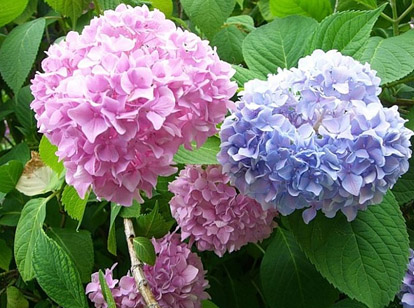
 The fame of the garden hydrangea extends far beyond the confines of rural gardens, with which she is still identified. It owes its good opinion to its large spherical and wonderfully colored inflorescences, an increasing number of new varieties and a long flowering period. Nowadays, hydrangea is also one of the most popular potted plants for terraces, balconies and window sills. Of course, it still maintains its leading position among ground shrubs.
Flowering pot varieties can be found on sale at the beginning of the year, meanwhile, field varieties begin to bloom at the earliest at the end of May. So long, how bad weather conditions prevail outside, greenhouse brushed shrubs should be kept in bright quarters. As soon as the weather is over, Set the hydrangeas to the open air and plant them or put them in pots, or to the ground. As soon as they catch on, any drop in temperature will be harmless to them.
BUSHES FLOWERING BLUE, WHITE, PINK AND RED, as well as in the shades of the above-mentioned colors. More and more varieties are distinguished by bicolor flowers. The arrangement possibilities are therefore considerable, especially since the flowers of some varieties change color slightly during the entire development cycle – from blooming, through flowering to menopause. The blue color of hydrangea flowers is a natural feature of plants and has nothing to do with breeding work undertaken in nurseries.. It is a question of the quality of the substrate and the presence of aluminum (aluminium); depends on the land, whether the flowers will turn blue, or in pink. It is known beyond doubt, that in an acidic medium with a pH of the order 4-4,5 the hydrangea turns blue. Only under such conditions are the roots able to assimilate the necessary clay. To prevent the color from turning pink, shrubs should be grown in an acidic substrate for hydrangeas, feed with fertilizer containing aluminum and irrigate with rainwater or soft water, artificially acidified, e.g. soaked in acid peat in a linen bag. Only varieties classified as white always bloom white.