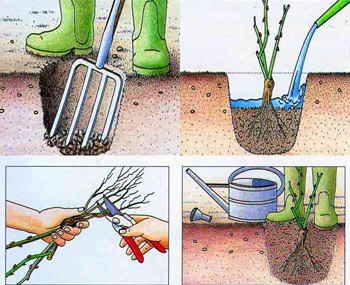
 The rose bed should be regularly loosened with a knurl or a conditioner. Thanks to this, we will be able to keep weeds in check and prevent the substrate from drying out. Deep loosening can be done with a special rose fork. Roses take root deep, therefore, the signal for emergency irrigation should be only a prolonged drought. To avoid fungal infections, leaves must remain dry (while watering, direct the stream of water to the ground, not for shoots). Flowering will be more abundant and longer, if faded flowers are cut regularly. Remove the faded flower clusters above the topmost leaf of the flower stem. Large-flowered varieties produce one flower per shoot. Cut the flower over the third leaf from the top.
Power; well balanced.
Repetitive flowering roses have an increased demand for nutrients. Growers supply the bushes with long-acting fertilizer; the first time when setting shoots at the end of March and the second time after the first flowering in June. Nitrogen preparations should be used only until the end of June, so that the shoots could lignify before the onset of the first frosts. In September, we can strengthen the frost resistance of plants, using calimagnesia. Organic products, like hornmeal, spreads in the fall with the flowering of roses in mind next year. We mix the fertilizers with the substrate to a shallow depth.
Diseases: important prophylaxis.
The most common disease of roses is black leaf spot, with dark colors with irregular edges. As a result of the disease, the leaves turn yellow and fall off. Varieties susceptible to blotch should be sprayed prophylactically during the setting of shoots (e.g. such protection measures, like Score 250 EC or Siarkol Extra 80 WP, Bravo 500 SC). It is important too, to collect all infected leaves lying around the bush in autumn. It is worth arranging new assumptions from certified varieties, which have undergone many years of resistance tests.