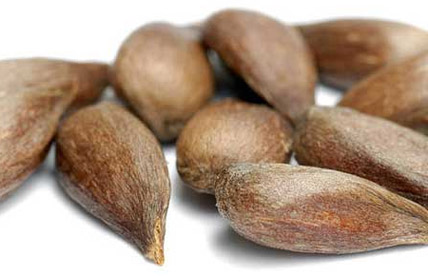
 The cultivars of fruit trees and shrubs are not propagated from seeds, because they produce varied offspring, with a very high variability of traits and inherit the traits of the mother plant to a very small extent. In order to obtain specimens similar to the mother plant from seeds, selection over many generations is necessary, sometimes lasting several dozen years. In order to obtain a large number of individuals identical to the mother plant in a short time, in practice, vegetative reproduction is used..
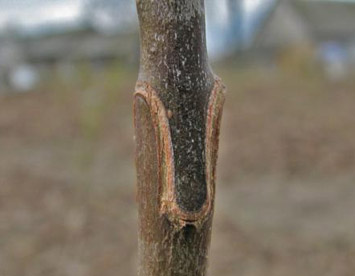
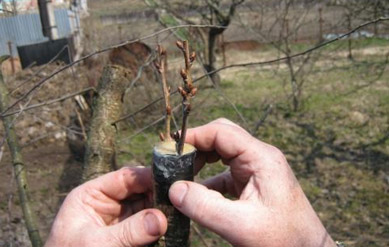
Varieties of fruit trees recommended for cultivation are propagated by grafting or budding on rootstocks obtained from seeds or vegetatively propagated.
The trees obtained as a result of vaccination consist of two components: zraza (cultivar) and washers, interacting with each other. The trees obtained in this way differ significantly in terms of their structure from the plants obtained by cutting or mounding (gooseberry and currant bushes), which are a faithful reproduction of the characteristics of the mother plant.
When propagating varieties by grafting on rootstocks obtained from seeds, it is difficult to accurately predict the size of the tree, fertility, resistance to frost and disease resistance. When using vegetative rootstocks, with features well known in advance, trees with a certain growth rate can be produced, time of entering the fruiting period, fertility and frost resistance. For these reasons, the vegetative rootstocks are more suitable for horticulture than those obtained from seeds.
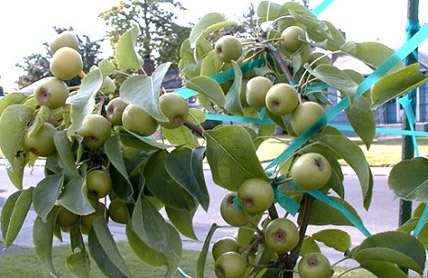
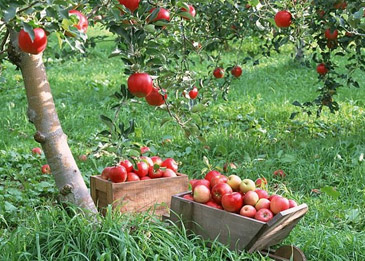
For the production of fruit trees in Poland, generative and vegetative rootstocks are used. Until recently, the production of trees was dominated by generative rootstocks. Relatively easy and quick reproduction and good blending with the recommended varieties made them widely used in the production of fruit trees.. The most important advantage of vegetative rootstocks is their high genetic evenness and the specific growth strength of individual clones. Dwarf trees are obtained by grafting or budding cultivars on certain vegetative rootstocks, semi-dwarf, vigorously or very vigorously growing. Due to these properties, vegetative rootstocks are more and more commonly used in modern horticulture.