The fruit tree consists of an underground part – root and aboveground – trunk and crown. The root collar forms a transition zone between the root system and the trunk. Sometimes between the rootstock and the cultivar, which do not fit together badly, a short section of shoot of a variety called intermediate is implanted, which allows the connection of two incompatible components – scion and rootstock.
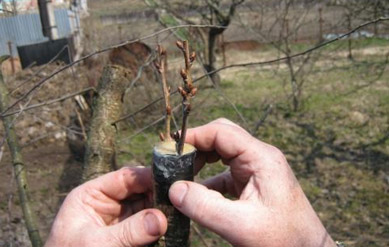
Recently, a section of a dwarf rootstock shoot is grafted more and more often on Antonówka seedlings, called the stunting insert, and only on it the cultivar is grafted or inoculated.
In order to prevent the trunks of frost-sensitive varieties from freezing, graft a resistant variety to the rootstock, which is called the guiding one and only on it under the crown or in the branches of the crown the susceptible variety is grafted. Trees with an intermediate, the inset or guide, therefore, consist of three interacting components.
During the fusion of the inoculated variety and rootstock, the sieve-vascular bundles are connected, which allows minerals to flow from the roots to the crown and assimilates in the reverse direction. The degree of fusion of the scion with the rootstock has a great influence on the physiological processes and metabolism, and also on such important features of fruit trees, how: strength of growth, fertility, time to enter the fruiting period, resistance to frost and resistance to diseases and pests. That is why so much attention is paid in practice to the correct selection of components.
For the needs of horticulture, trees that create small crowns in the future are the most suitable, early fruiting and distinguished by high fertility. These requirements are met by trees grafted on poorly growing rootstocks. The recommended rootstocks should also be highly resistant to diseases and pests, blend well with cultivated varieties, and also easy to reproduce. In our climate, the rootstocks should also be very resistant to frost.
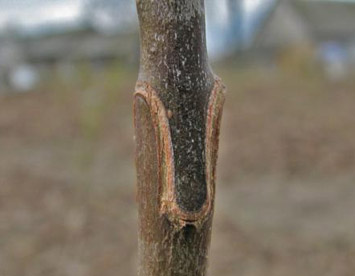 The fruit tree consists of an underground part – root and aboveground – trunk and crown. The root collar forms a transition zone between the root system and the trunk. Sometimes between the rootstock and the cultivar, which do not fit together badly, a short section of shoot of a variety called intermediate is implanted, which allows the connection of two incompatible components – scion and rootstock.