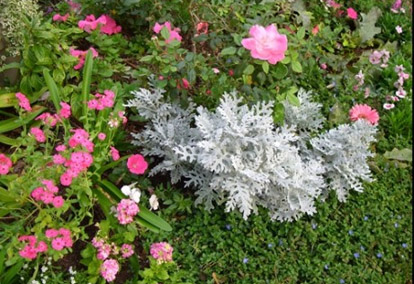
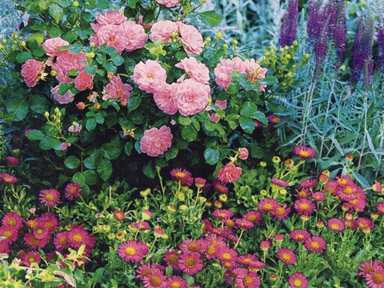
 In perennials, roses have found excellent partners in bedding plantings. The most effective, expressive arrangements are most often created then, when the magnificent flowers on the rose bush are accompanied by carefully selected ornamental perennials.
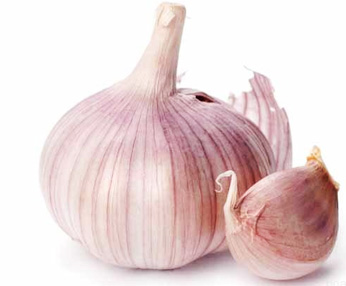
So that perennials and roses in a common bed do not compete with each other, the colors and shapes of their flowers should be clearly different. Opposites build tensions, which are often necessary to liven up the image of the composition. For this reason, slender, candle-shaped larkspur inflorescences appear in close proximity to the roses, digitalis and lupine, as well as the magnificent goblets of lily and daylily flowers. SPHERICAL GARLIC FLOWERS ALSO FIT EXCELLENTLY. Fine-flowering perennials, e.g. gypsophila, geranium and alchemilla, there are – as in bouquets – a charming addition to rose flowers, and besides, they cover any empty spaces on the discount. Low species of perennials should grow in small groups, because as individual plants they are almost completely lost in the shade of the magnificent rose flowers.
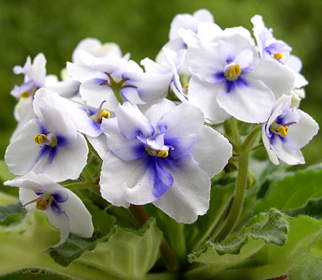
When choosing colors, you should also follow the rule, that perennials are a complementary supplement for roses and should not exceed them even to a small extent, obscure or dim. For example, red roses should not be combined with perennials with flowers in strong shades of this color. Perennials perfectly complement the color palette of rose flowers, which lacks pure blue color. In the multi-colored image of a rose-perennial bed, an element of calm is often needed. The green islets of tranquility usually form boxwood or yew trees. Shrubs are strongly supported by perennials with gray leaves, for example, Stachys byzantina woolly purgatory or Artemisia mugwort.
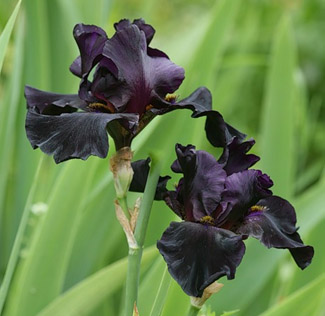
Discounts kept in similar shades of one color are a special case, so here companion perennials should be chosen very carefully, that such a unique arrangement would make strong, surprising impression. The pictures on the right show three examples of attractive single-color discounts.
ROSES NEEDS SPACE FOR BREATHING, therefore, companion perennials should not be planted too close to shrubs. A distance of approx 0,5 m. By keeping this necessary distance, we will provide the roses with a minimum air flow, reducing the risk of developing fungal diseases. Let's not forget about fertilizing the roses, which perennials will also benefit from. Expansive plants require careful supervision. Cut their suckers and runners out, as soon as they appear too close to rose bushes.